All posts

Child Development

The Link Between Family Stories and Your Child's Self-Esteem

August 22, 2026 · 4 min read

In a world full of noise, the simple act of sharing your family's history has a quiet power. Research shows this slow, low-tech ritual is linked to stronger, more confident kids.

A family laughing together on a sofa while looking at old photos.

The Stories That Shape Us

We live in a fast-moving world. Our attention is pulled in a hundred directions at once. It can feel hard to find quiet moments to just connect.

But some of the oldest family rituals still work. One of the most powerful is simply telling stories. Not just fairy tales, but the real stories of your own family.

These are the stories of where you came from. They are the small moments and the big challenges that made your family who it is today.

What Researchers Found About 'Who We Are' Stories

For years, researchers have been curious about this. Does knowing your family's history actually matter for a child's well-being?

A body of research from Emory University suggests it does. A key study looked at how families share stories together. The work, published in the journal Family Process, found that the way families talked about their past was connected to their children's sense of self.

Specifically, the 2006 study by Bohanek and colleagues found that when families told their stories together, their preteen children reported higher self-esteem. This finding was particularly strong for girls. It's a powerful reminder that our stories are more than just memories.

It’s the process of families sharing stories together that likely fosters these positive outcomes.

How You Tell the Story Matters

The research from Emory points to something important. The benefit isn't just from a child knowing facts about their ancestors. The magic seems to be in the telling.

The study highlighted what are called 'coordinated family stories'. This is when everyone gets to contribute. It is not one person giving a history lesson. It is a conversation.

Everyone shares a memory. A parent starts a story, a child asks a question, a grandparent adds a funny detail. This back-and-forth builds a shared sense of identity. It tells a child they are part of something bigger than themselves.

Simple Story Starters

You don't need a grand epic. Start small. 'Tell me about the day I was born.' 'What's a funny story about when you were my age?' 'What was the bravest thing Grandma ever did?'

Our Take: Protecting Slow Rituals

At Story Genie, we are an AI company. We think a lot about how technology shapes family life. And we are open about the tools we use.

We believe technology can be a wonderful starting point for connection. But it can also create distraction. Thoughtless defaults are the real problem, not technology itself. We choose to build tools that encourage slow, meaningful moments.

We publish research like this because it grounds us in what truly matters. It's not about the flashiest toy or the latest app. It's about presence and attention. Sharing your family's history is a simple, powerful act of presence.

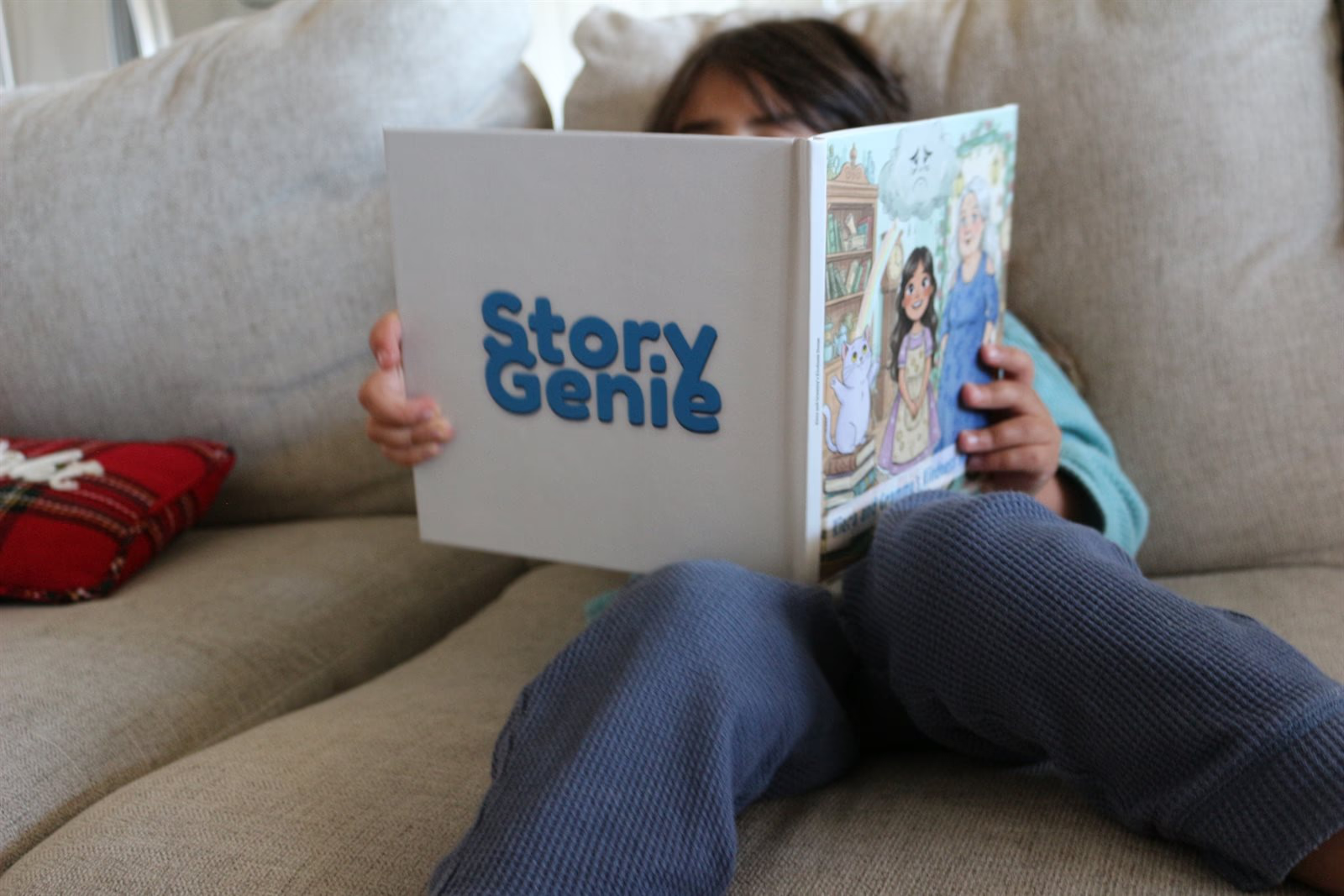
A book can be a wonderful prompt for these conversations. But the real magic happens when you put the book down and start talking. That is a ritual worth protecting.


The short version

  • Research from Emory University links knowing family stories to higher self-esteem.
  • The way a family tells stories together seems to matter more than the facts themselves.
  • Encourage everyone to share memories and add details to the family narrative.
  • Simple, everyday stories are just as powerful as dramatic historical tales.
Bring their story to life

Free preview in 58 seconds. No credit card needed.