All posts

Child Development

Electronic vs Traditional Toys: What a Study Says About Playtime Talk

August 15, 2026 · 4 min read

A small study from Northern Arizona University looked at how different kinds of toys change the way parents and babies talk during play. The findings might surprise you.

A wooden block, a picture book, and a tablet lying side-by-side on a child's playmat.

Do Toys Change How We Talk to Our Kids?

Walk down any toy aisle and you will see two main kinds of toys. There are traditional toys like blocks, puzzles, and books. Then there are electronic toys with lights, sounds, and music.

Many parents wonder which is better for their child's development. While play is always good, researchers have asked if the type of toy changes the interactions between parents and children. Specifically, does it affect how much we talk with our kids during playtime?

One Study, Three Types of Toys

A study from Northern Arizona University explored this exact question. Researchers worked with 26 parent-infant pairs. They observed them playing with three different sets of toys: electronic toys, traditional toys like wooden puzzles, and board books.

The results were interesting. The researchers noted that play with electronic toys was associated with less talk from parents. Parents spoke fewer words, took fewer turns in the conversation, and responded less to their child. When playing with traditional toys and books, the opposite was true. These sessions were linked to more parent talk and more back-and-forth interaction.

It is important to note this was a small study. It shows a link, not a direct cause. But its findings, published in a major medical journal, offer a useful way to think about playtime.


Play with electronic toys was associated with a decrease in parental word count, conversational turns, and parent verbal responses when compared with play with traditional toys or books.

Choosing Toys as Conversation Starters

This research does not mean you need to throw out all electronic toys. Many can be fun and educational. Instead, it suggests the value of balance. Simple, traditional toys seem to create more space for conversation. They do not make sounds or direct the play on their own.

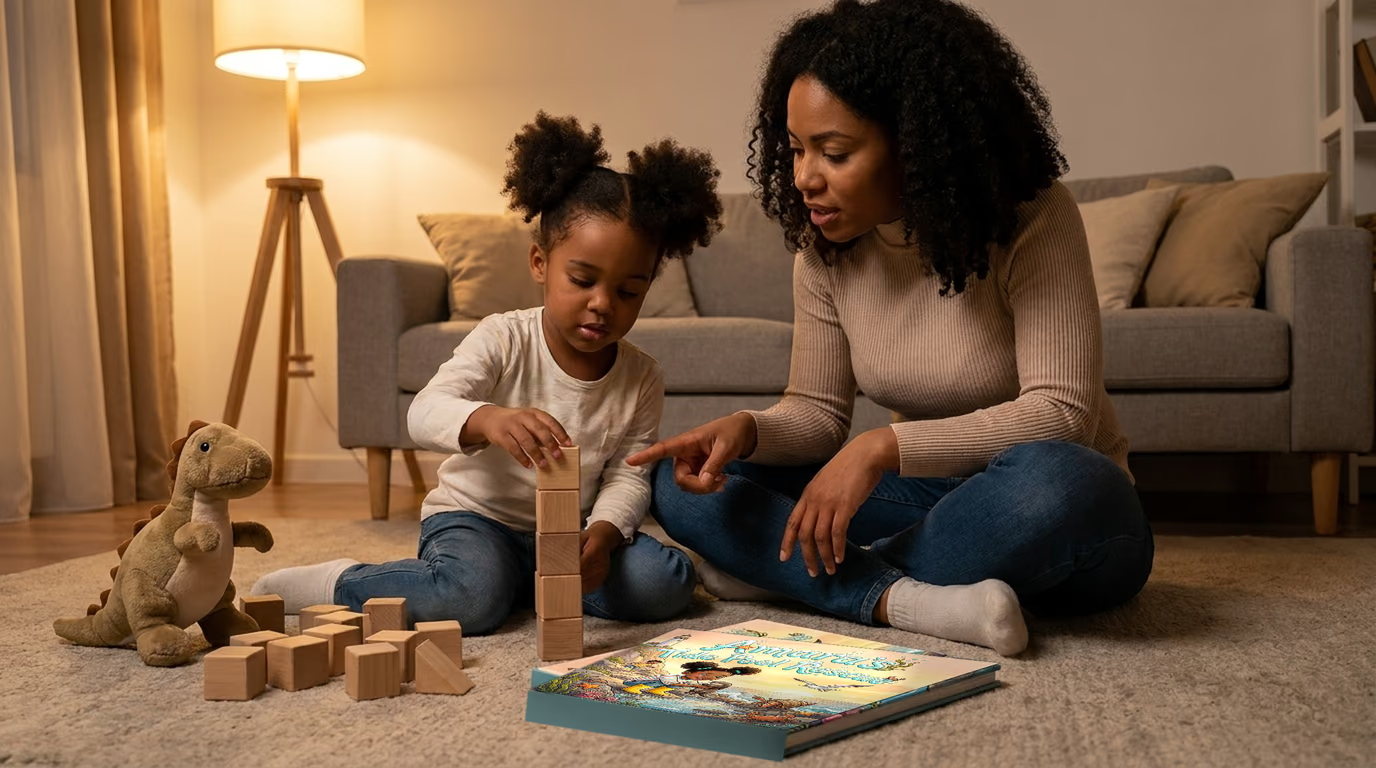
This quiet space invites parents and children to fill it with their own words, questions, and stories. A pile of blocks becomes a tower with a story. A picture book becomes a shared adventure. These toys act as conversation starters, which is key for language development.

A Simple Toy Swap

Next time you sit down to play, try choosing a simple set of blocks, a puzzle, or a picture book. Notice how it changes the conversation. You might find yourself describing shapes, asking questions, or making up little stories together.

Why We Share Our Research

At Story Genie, we are open about how we use AI to help create our personalized children's books. We also believe it is our job to share the research that guides our thinking. We want parents to have the tools to make their own informed decisions.

Studies like this one remind us of the simple power of a book. It is a traditional toy that opens up a world of conversation. We are proud to make books that become a launchpad for connection, one story at a time. Being honest about our process, and the science behind our choices, is part of that commitment.

The short version

  • A 2016 study found traditional toys and books were linked to more parent-child talk than electronic toys.
  • The study was small (26 pairs) but suggests that simple toys may create more space for conversation.
  • Balancing electronic toys with books and blocks can support language-rich playtime.
Bring their story to life

Free preview in 58 seconds. No credit card needed.