All posts

Child Development

The Real Magic of Pretend Play: How Making Up Stories Builds Key Skills

October 15, 2026 · 5 min read

In a world of fast screens and endless scrolling, the slow magic of make-believe is a powerful way to connect. Research shows it builds crucial skills, too.

A child wearing a homemade superhero cape made from a red blanket stands proudly in a living room.

It’s Not Just Play. It’s Powerful Work.

You’ve seen it. Your child puts a blanket on their back and becomes a superhero. They pour imaginary tea for a row of stuffed animals. It looks like simple fun. But what if it’s also some of the most important work they do all day?

It can feel hard to know what really helps our kids thrive. The good news is that some of the most powerful tools for development are simple, timeless, and free.

A large review of decades of research from the University of Virginia looked at the role of make-believe. The conclusion was clear. The research found that pretend play is consistently linked with the development of social understanding, reasoning, language, and creativity. This is not a finding from one small study, but a consistent pattern seen across many.

What you can do tonight: The next time you see your child lost in their own little world, just watch for a minute. See the work they are doing. You don't need to do anything at all. Just knowing the value of their play is the first step.

Acting Out Roles, Understanding People

Pretend play is like a rehearsal for life. When children pretend to be a doctor, a parent, or even the family dog, they are practicing empathy. They have to imagine what another person or creature might think and feel.

They negotiate roles with friends. Who gets to be the brave knight? Who is the captured wizard? They solve problems together within the story. What happens when the dragon burns the castle? These are social skills in action.

It's a safe space to explore big emotions and complex situations. Playing 'school' can help a child work through anxieties about their own first day. Acting out a story helps them understand different points of view.

What you can do tonight: Join their game, but let them be the director. Ask questions instead of giving commands. Try saying, 'Oh no, it looks like this bunny is very sad. What should we do to help him?' Following their lead shows them their ideas have value.

Telling Stories, Building Language

Imaginary worlds need words. When your child creates a story, they are stretching their vocabulary and learning how to put sentences together in new ways. They are building the foundations of narrative skill.

They learn that stories have a beginning, a middle, and an end. This is a critical skill for understanding the books you read together and, later, for reading on their own.

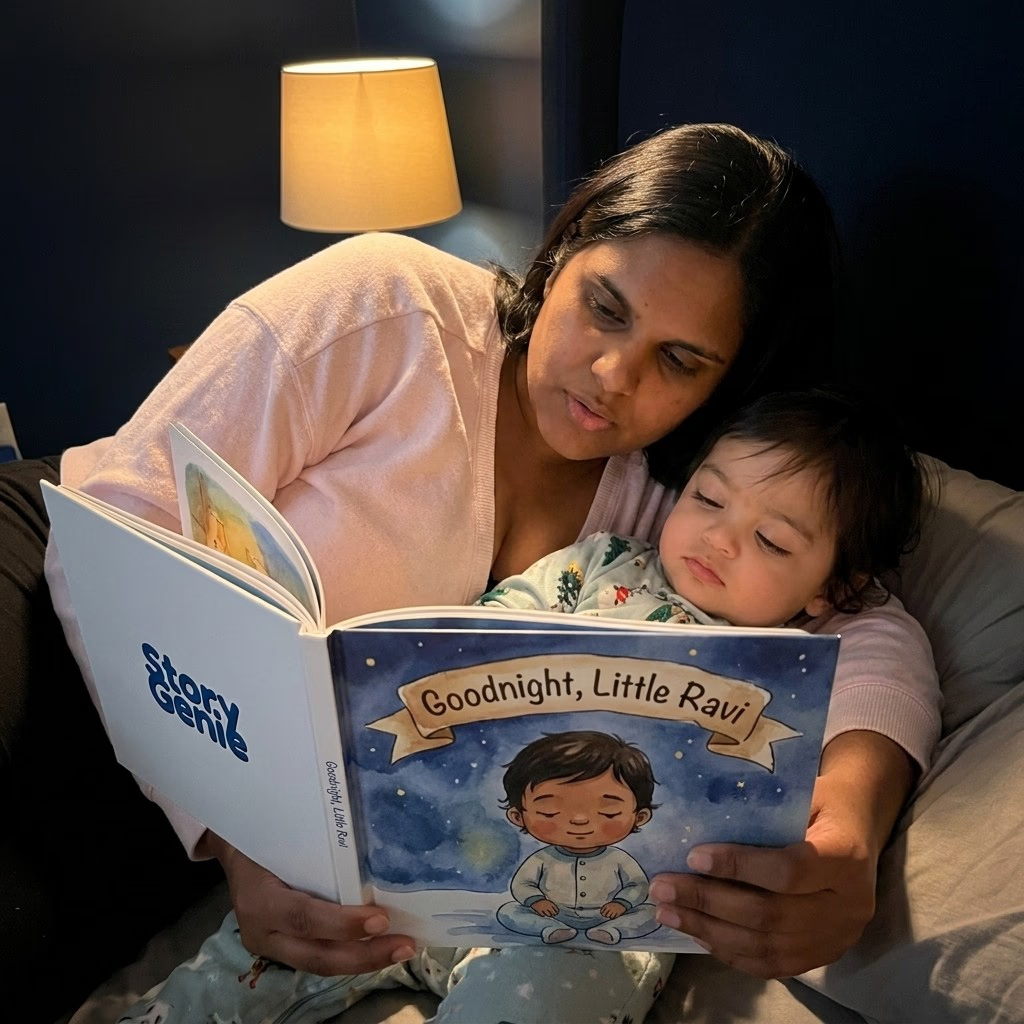
This is a place where reading and play connect perfectly. The characters and worlds they meet in books often become the fuel for their pretend play later.

What you can do tonight: Use a book as a launchpad. After you finish a story, try acting out your favorite part. Or ask an open-ended question like, 'What do you think the little bear did the next day?' You don't need any props, just your imagination.

A Cardboard Box and a World of Ideas

Imagination is like a muscle. The more you use it, the stronger it gets. Pretend play is the gym.

It teaches children to see possibilities everywhere. A simple cardboard box can be a race car, a castle, or a spaceship. This kind of flexible, creative thinking is the heart of problem-solving.

This kind of play doesn't need a battery or a screen. It just needs a little time and space. In a world engineered to capture our children's attention, giving them twenty minutes of unstructured, imaginative time is a quiet act of presence. It’s protecting their ability to create their own entertainment, not just consume it.

What you can do tonight: Offer simple, open-ended toys and props. A few blocks, some old scarves, a set of nesting bowls. The best tools for imagination are often the ones that do the least, asking more of your child's creativity.


Why We Believe in Make-Believe

We believe that twenty quiet minutes of focused time with your child matters more now than ever. Technology isn't the enemy, but thoughtless defaults can be. The quiet ritual of a bedtime story is an act of connection worth protecting.

We publish research like this because we want to empower parents with good information. As an AI company, we think honesty is the most important feature. That means being upfront about how our books are made and sharing the evidence for why stories, play, and reading matter so much.

A book can be a wonderful starting point for a child's imagination. Our goal is to create a tool that helps spark the very kind of creative play this research describes. A book that becomes a treasured keepsake, a prompt for conversation, and a part of your family’s own unique story.

The short version

  • A major review from the University of Virginia found strong links between pretend play and skills like social understanding, language, and creativity.
  • Playing roles helps children practice empathy and problem-solving in a safe context.
  • Making up stories builds vocabulary and narrative skills that are foundational for reading.
  • Simple, open-ended props like cardboard boxes often spark more creativity than complex toys.
  • Encouraging pretend play is a simple, screen-free way to support your child's development.
Bring their story to life

Free preview in about 4 minutes. No credit card needed.