Reading
How Storytelling Play Boosts Early Literacy Skills
August 31, 2026 · 5 min read
In a world of fast-paced screens, one of the most powerful ways to build a reader is surprisingly slow. It looks a lot like play.


Reading
August 31, 2026 · 5 min read
In a world of fast-paced screens, one of the most powerful ways to build a reader is surprisingly slow. It looks a lot like play.
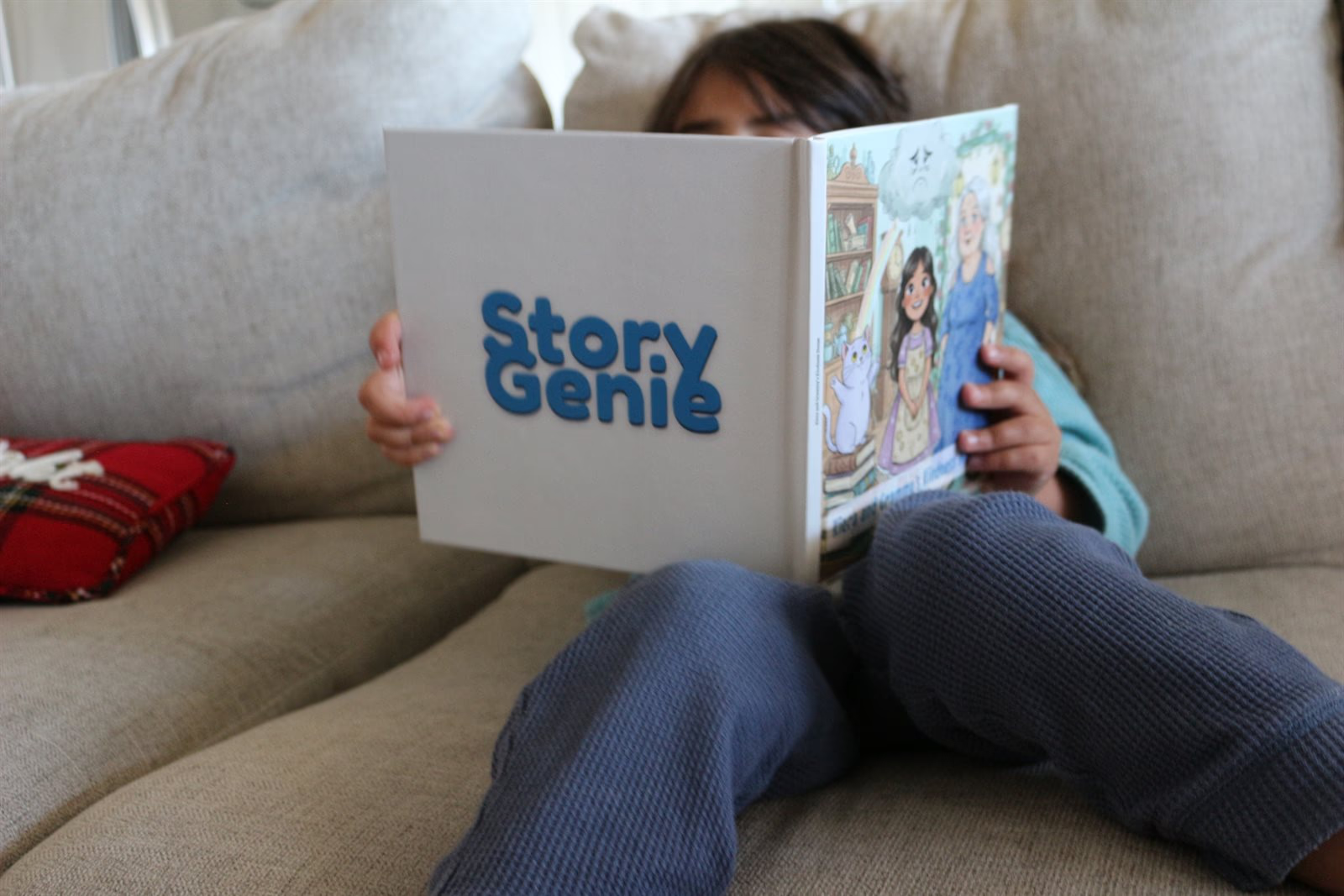
You want to raise a child who loves to read. You know that reading together is important. But what about the stories your child makes up on their own, the ones they act out with their toys in the living room?
It turns out this kind of imaginative play is deeply connected to reading readiness. A study from Lehigh University looked at a group of 149 preschoolers. The researchers found that children who regularly participated in storytelling and story-acting showed improvements in key areas.
These skills included understanding how stories work, knowing more about letters and words, and better self-regulation. These are the exact building blocks that help a child become a confident reader. The research suggests a strong link between this creative play and the development of early literacy skills.
This does not mean your child needs a formal program. It just means that the games they are already playing are doing important work. Your job is simply to notice and encourage it.
You can start tonight. Just ask your child what their favorite stuffed animal is thinking. You might be surprised by the story that unfolds.
Helping your child become a storyteller does not require special tools. It only requires a little time and a willingness to be silly. The goal is not to create a perfect narrative. The goal is to create a moment of connection.
You can start with a simple prompt. Try asking 'What if' questions. What if your dog could talk? What if our car could fly? These open the door to imagination without any pressure.
Another easy entry point is to tell a story about your child's day. 'Once upon a time, a super kid went to the park. What did they see first?' Making your child the hero of the story is a powerful way to get them engaged.
Remember to let them lead. If the story takes a weird turn, go with it. A story about a talking dog that suddenly decides to fly to the moon and eat cheese is a successful story. It means your child feels free to create.
Your only job is to listen and ask 'And then what happened?' It is one of the most powerful questions you can ask.
Simple Story Starters
Stuck for an idea? Try one of these: - Once there was a squirrel who lost his favorite nut... - On a rainy Tuesday, a magic box appeared on our doorstep... - Tell me the story of what your shoes did before we bought them. - What do you think the birds are saying to each other?
The second part of the practice studied at Lehigh University was story-acting. This is where a child's imagination becomes physical. It helps them understand characters, emotions, and sequence even more deeply.
Acting out a story can be very simple. It can mean using funny voices for different characters as you tell a story together. It can mean using hand puppets or even just your hands to show the action.
If your child tells you a story about a giant stomping through the forest, get on the floor and stomp with them. If the story is about a tiny mouse, use a high, quiet voice. This is not about performance. It is about sharing an experience.
This kind of play helps your child connect words to actions and feelings. It makes a story a living thing, not just something flat on a page. And for active kids, it can be the best way to hold their attention.
Tonight, try telling a simple story with sock puppets. You just need two socks and a little imagination to get started.
We live in a busy world. Our children's attention is a resource that many apps and shows are engineered to capture. It can feel like there is no time for the slow, meandering work of imaginative play.
We believe that protecting these small, quiet moments is an act of presence. Choosing twenty minutes of unstructured story play over another episode is a powerful choice. It creates a space for connection that a screen cannot offer.
Technology is not the enemy. But the thoughtless defaults are. The automatic next episode, the endless scroll. These things can crowd out the space a child needs to build their own worlds.
When you sit on the floor and act out a story your child invented, you are sending a clear message. You are saying, 'Your ideas matter. Your inner world is important. I am here with you'. That is a feeling that builds more than just literacy skills.
The short version
Free preview in about 4 minutes. No credit card needed.

