All posts

Reading & Development

Picture Book Vocabulary: The Surprising Source of Richer Words for Your Child

October 5, 2026 · 5 min read

We talk to our kids all day. But a surprising study shows that the quiet twenty minutes with a picture book at bedtime might be their richest language lesson of the day. Here’s why that simple ritual matters.

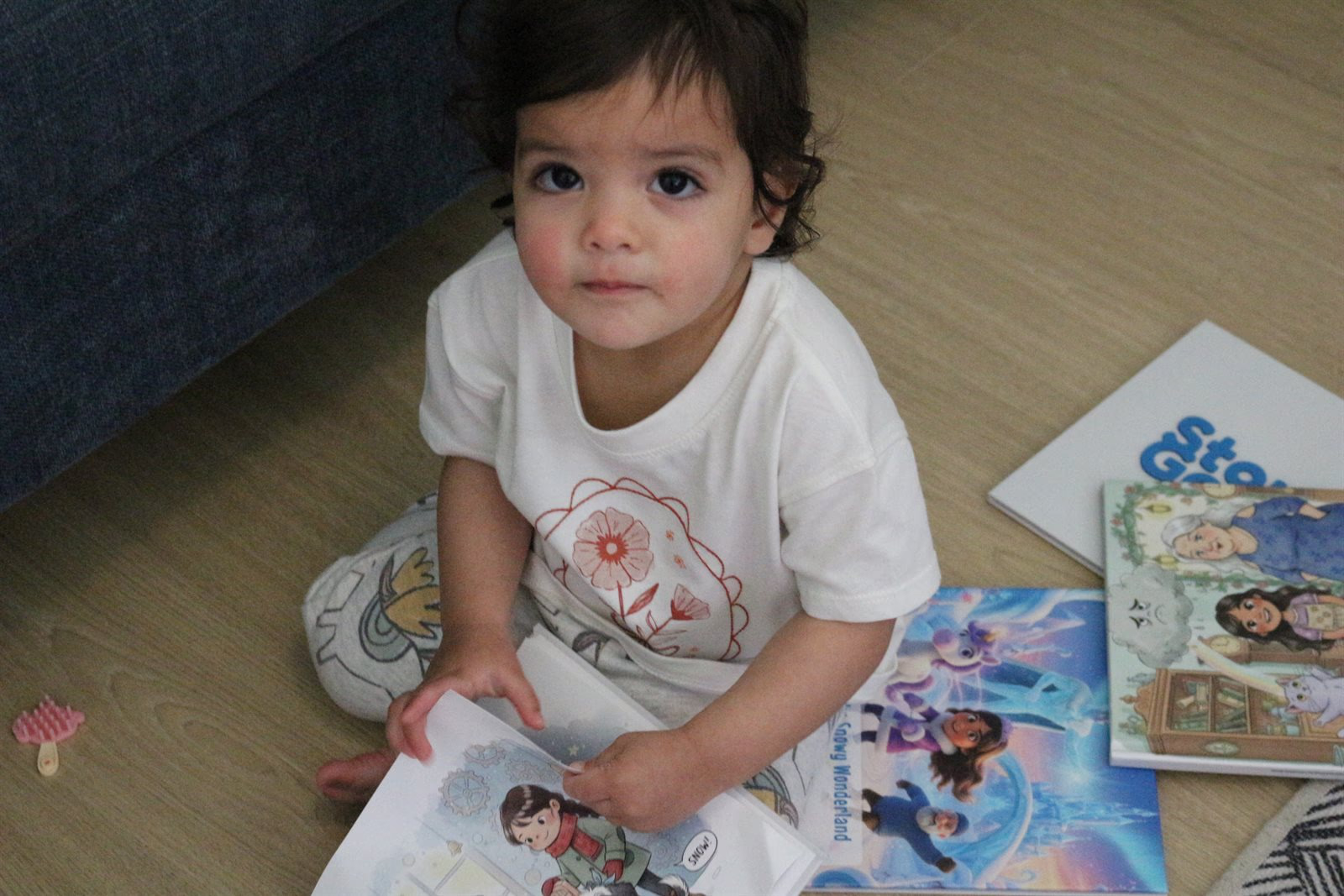
A close-up shot of a parent's hands and a child's hands holding a colorful, open picture book together.

More Than Just a Bedtime Story

As a parent, you want to give your child the best start. You talk to them, sing songs, and narrate your day. It feels like this constant conversation is the main way they learn new words.

That's absolutely true. But what if one of the most powerful vocabulary-building tools is already sitting on their bookshelf? This is not about adding another task to your long day. It is about seeing the hidden power in a family ritual you may already enjoy.

The simple act of reading a story together does more than just help a child settle down for the night. It opens up a world of words they might not hear anywhere else.

What Researchers Found on the Page

It feels like we use a lot of words talking to our kids. But are they the most varied words? Researchers at the University of California, Riverside wanted to compare the language in books to the language of everyday parent-child talk.

They analyzed 100 popular children's picture books. Then they compared the words in those books to a large database of recorded conversations between parents and young children.

The results were clear. Picture books were found to contain more unique word types than child-directed speech. This means that in a typical story, a child is exposed to a wider, more diverse set of words than they are in a typical conversation.

This happens for a simple reason. When we talk, we often use the same familiar words. Authors of books, however, use richer language to describe new places, characters, and ideas. You do not need to be a walking dictionary for your child. The book does the work for you. Your job is just to open it and share it.

Any book from your local library can be a treasure chest of new words. The most important step is simply starting.

29

Average unique words per 1,000 in picture books

20

Average unique words per 1,000 in parent-child speech

Why This Quiet Time Is So Important

This finding is about more than just vocabulary. It is about the value of quiet, focused time in a noisy, fast-paced world. Our attention is constantly pulled in different directions. Notifications buzz and screens glow, all engineered to capture our focus.

Reading a book together is a small act of rebellion against that. It is a moment when you close the door on all the distractions. You and your child can just be present with each other and a story. This shared attention is what helps those new words stick. It connects language to a feeling of closeness and comfort.

This is our stance. We believe these small, slow rituals are worth protecting. The twenty minutes you spend reading a book might be the most powerful time of the day. It is when you build connection and a love of learning, one page at a time.

To make this happen, try putting your phone in another room during story time. Get cozy, slow down your voice, and let the world outside disappear for a little while. That is the real magic.

Bringing the Best Words Home

So how can you use this knowledge? It is simpler than you think. You do not need special or expensive books to introduce your child to new words.

Start at the library. Pick out books on topics your child is curious about, like construction sites, ocean animals, or faraway places. These stories will naturally contain specific, interesting words you might not use in your kitchen.

When you come across a new word, you do not need to stop for a formal definition. Simply reading it clearly in the context of the sentence is often enough. Exposure is the goal, not a quiz. If your child does ask what a word means, you can offer a simple explanation.

This is also a place where a book made just for them can be special. A story about a child's own experience, like their first day of school or a visit to their grandparents, can use new 'feeling' words in a way that is deeply personal and easy to understand. It connects a richer vocabulary directly to their own life.

The simple action for this week is to find one book about something new. See what words you discover together.


Why We Publish Our Research

We are a technology company, and we believe it is important to be honest about how we make our books. We also believe it is important to be honest about the science of reading and child development. We publish these research-backed posts to help you make informed choices for your family.

This study from the University of California, Riverside is a great reminder that simple, traditional rituals have profound benefits. Reading a book together feeds a child's mind with new words and their heart with your undivided attention.

We use AI to help you create one special book that becomes a part of that ritual. It is a keepsake that captures a moment in time and makes your child the hero of their own story. But the real magic always happens when you sit down, open a book, and read it together.

The short version

  • Picture books expose kids to more unique words than everyday conversation.
  • You don't have to be a 'word expert.' The book provides the new vocabulary.
  • Protecting a quiet, daily reading ritual gives these new words a place to land.
  • Use the library to explore topics outside your daily family routine.
Bring their story to life

Free preview in about 4 minutes. No credit card needed.