All posts

Reading science

What the research actually says about reading with your kid

July 22, 2026 · 5 min read

Our social posts cite studies. This is the page where the receipts live. Here is each claim we make, the research behind it, and honestly, what it does not prove.

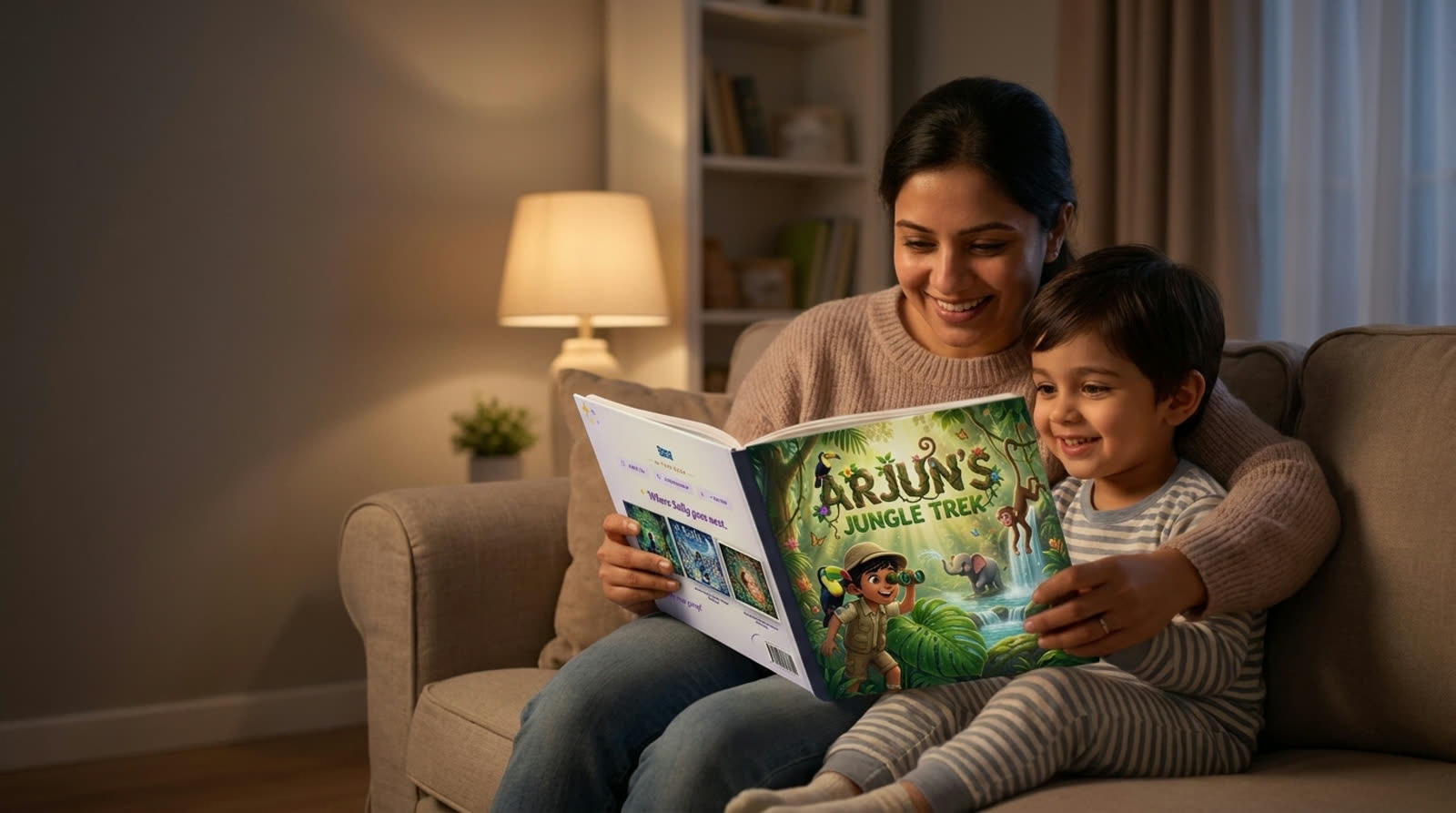
A parent and child reading a book together at bedtime

Reading the same book again is not a rut

Your kid asks for the same book for the ninth night running. It can feel like you are stuck. You are not.

University of Sussex researchers read three-year-olds either the same few books over and over, or a rotating stack of different ones. A week later, the kids who heard the same books had learned and kept more new words. The kids who got a different book every night had not.

The sample was small, sixteen children, so treat it as a strong hint and not a law. But it fits what a lot of parents already sense. Repetition is how a young kid gets a grip on a word.

You do not have to finish the book

Some nights you do not have the whole book in you. Read one page. Ask about it. That can do more than racing to the end.

The approach has a name, dialogic reading. Instead of reading at your child, you stop and ask. What do you think happens next. Why is he hiding. The founding study was a randomized trial, and the US Department of Education research arm rates the method as effective for oral language. A 2026 review pooled sixty-four studies and found a large positive effect on early literacy.

The effect is on language and vocabulary, and it is strongest for younger kids. It is not a promise of reading scores or IQ. One page, asked about, is our plain version of what those studies tested.

A steady wind-down is linked to better sleep

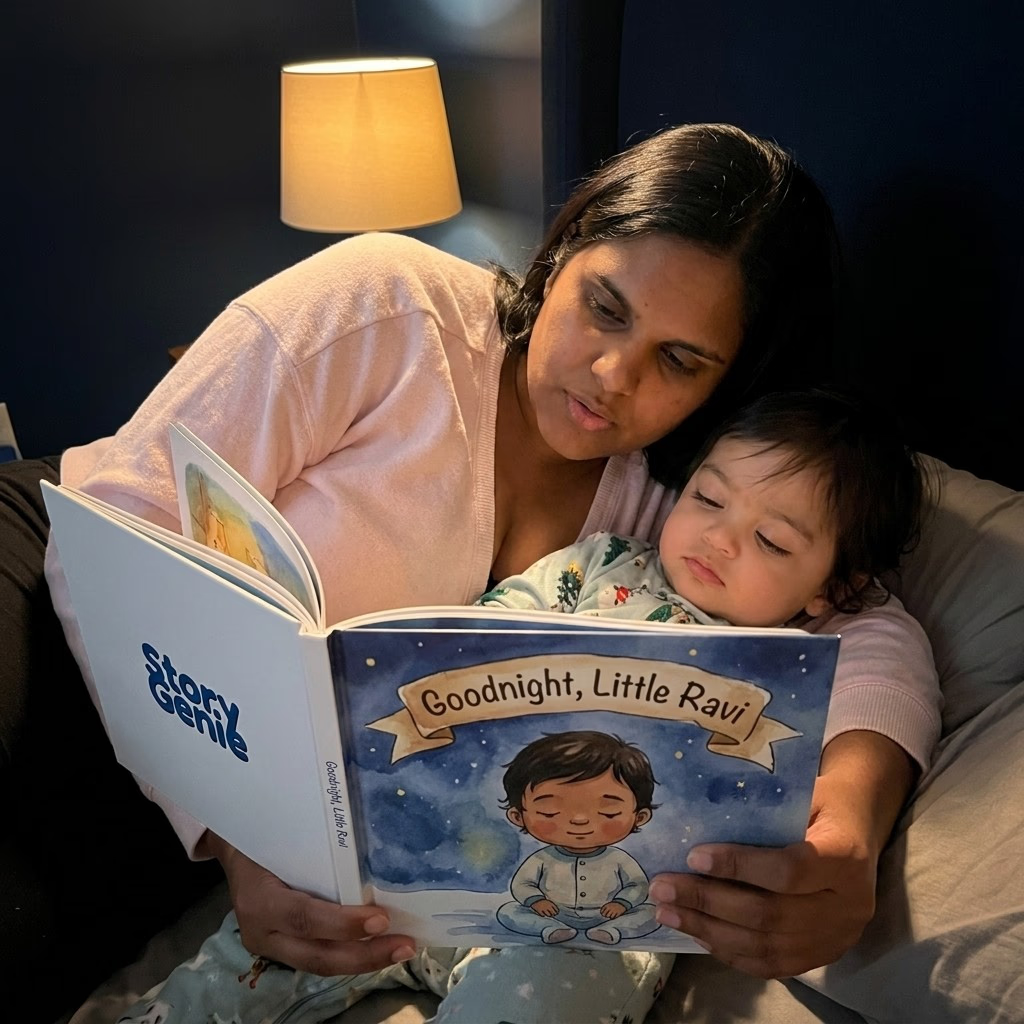
A parent reading a bedtime book with a drowsy child

A bedtime book is not only about words. It is a signal. Same book, same chair, same time. The body reads the pattern and starts to settle.

The biggest study here followed more than ten thousand young children across thirteen countries. The more nights a family kept a consistent bedtime routine, the earlier kids fell asleep, the faster they drifted off, and the fewer times they woke. A follow-up found the gains showing up within a few days of starting.

That study is correlational, so we say linked to, not causes. But the pattern is large and it holds across cultures. A book is one of the easiest ways to make the wind-down the same every night.

Swap the screen for a book before bed

The hour before bed is where a book earns its place. Not because screens are evil, but because of what they do to a tired kid.

A 2024 randomized trial had families remove screens in the hour before bed and swap in calm activities. Sleep, measured with devices rather than guesses, improved. The researchers call the effect modest, and we will keep their word for it. The American Academy of Pediatrics already suggests no screens in that last hour.

A book fills that hour without the bright light and the just-one-more pull. It is the calm activity the trial was pointing at.

Books hand kids words that talking does not

Everyday talk is warm and it matters. It is also narrow. We run a household on a small set of words. Books reach wider.

Researchers at Indiana University compared a hundred picture books to ordinary child-directed speech. The books held more unique words. A separate Ohio State study estimated that a child read five books a day hears well over a million more words by kindergarten than a child who is not read to.

Read that number carefully. It is words heard, not words learned, and it is an estimate. It is not the old thirty-million-word claim, which is contested. What holds up is simple. Stories are where a kid meets words that dinner does not serve.

Why we publish our sources

Most of this category sells with numbers you cannot check. A statistic with no name behind it. We would rather show our work.

Every claim above names the researchers, the institution, and the year, with a link to the study. Where the evidence is thin or correlational, we said so out loud. We left out numbers we could not trace to a real study, including a tidy one that only lived on a competitor marketing page.

We are also upfront about being an AI company. Our AI writes and illustrates the story, you approve every page, and our team prints and binds each book in the US. Honesty about the research and honesty about the AI are the same habit. If we will show you the receipts on child development, you can trust us with a photo of your kid.


The short version

  • Say yes to the same book again. Repetition is how new words stick.
  • One page, asked about, beats the whole book raced through.
  • Keep the wind-down the same every night. A book makes that easy.
  • Trade the last screen hour for a calm book.
  • Read one book tonight. The words add up faster than you would guess.
Bring their story to life

Free preview in 58 seconds. No credit card needed.